
 The tower above Little’s first entryway is a good place to get a view of the Blair Arch-Junior Slums neighborhood. The roof of the tower is accessible via a hatch at the top of a rickety wooden staircase. Battlements surrounding the roof provide both insurance against falling off and a sense of battling the Huns. The Saturday night of Reunions, the battlements were manned by students and alumni in various states of sobriety. The tower also granted an opportunity for otherwise unattainable pictures of the 5th Reunion.
by Mendy Fisch
photos by Ricky Silberman '13
Showing posts with label Reunions 2010. Show all posts
Showing posts with label Reunions 2010. Show all posts
Wednesday, June 2, 2010
A lofty view of Reunions


Saturday, May 29, 2010
Reunions Coverage: Singles Mingle

The man in question was Ernie Cruikshank ’66, a stately gentleman in blue overalls who worked the room with a smile. Cruikshank was one of many Princeton alumni who gathered at the Chancellor Green Rotunda for the second annual Singles Mingle — an “opportunity for singles from all of the Reunion classes who share one great common denominator — a love of Princeton — to mingle,” according to the Reunions brochure.
Many of the singles who attended the event seemed to attribute their lack of success in the dating scene to too much stress or demanding careers.
“I think people come back to Reunions and a lot of them are single, and they can mingle with the different people and different classes everywhere,” said organizer Jill Baron ’80.
Indeed the event seemed ideal for alumnae such as Cruikshank, who didn’t find the Reunions tents conducive to meeting people because of the loud music from the bands. The Rotunda, with its dim lights, free-flowing red wine, and quiet corners, seemed a little more helpful.
“This is a really nice place to mingle,” he said. And a nearby young woman agreed, describing the event as “really laid back” and an easy place to talk to people.
Yet, some were a little more skeptical. “This is more of a sketchball event than a mingling event,” said Ian Auzenne ’10 as he surveyed the room.
This was, of course, before he kissed my hand.
by Tara Thean
Reunions Coverage: Eliot Spitzer ’81 on Lessons from the Economic Crisis
If you ask Eliot Spitzer ’81, there is one major lesson to take from the recent financial crisis: “Princeton economists are better than Harvard economists.” Or at least that’s what the former New York governor and attorney general, and current Slate columnist, had to say Saturday morning in a packed lecture in McDonnell Hall.
Comparing economics professor Paul Krugman, former federal reserve chairman Paul Volcker ’49 and former economics professor Joseph Stiglitz to National Economic Council chair (and former Harvard president) Larry Summers, Spitzer had one particularly Old Nassau-spirited suggestion for fixing the economy: “Take all the Harvard economists out of Washington, and send them down to Princeton,” he said. “Summers is wrong.”
In the Class of 2000 Millennial Lecture, “Lessons from the Economic Crisis,” Spitzer — who attended Harvard Law School after Princeton — also explained what he believed to be the other problems with the financial system, and with its current road to recovery.
Spitzer included anecdotes from his time as New York’s attorney general in describing his three rules for the framework of government work. First, he said, only government can enforce the rules of integrity and transparency in the marketplace. “Self regulation was a farce, it was a joke,” he explained. “It never worked.” He also noted that private actors do not always completely measure the impact they have on others, and that the private sector often fails at maintaining what the public may see as “core values.” These maxims support the need for government regulation, he said.
Regarding the government’s bank bailouts, Spitzer explained that “there should be no doubt among reasonable people [that] we needed to bail out the banks,” but that inserting the money into the system was the “easy part.” He noted that now comes the difficult part — figuring out how to properly regulate the financial system so that a similar crisis does not occur down the road, something of which he seemed wary.
Spitzer was not overly optimistic about current reform, which he said “rearranges the deck chairs on the Titanic,” while addressing just some of the important issues. He noted that the financial sector still must reconcile the banks’ “fundamental asymmetry,” which holds that the banks’ gain is privatized while their risk, and the losses that come along with it, falls to the public sector. Spitzer said much of the blame should go to those currently in power, such as Treasury Secretary Tim Geithner. Spitzer’s analysis of Geithner’s performance in effecting reform was blunt: “He blew it.”
by Gabriel Debenedetti
Reunions Coverage: Learning to fail at the A4P panel discussion
 The necessity of failure was a key theme at “Trailblazers: Perspectives of Asian American Alumni,” a panel discussion this morning in the Whig Hall senate chamber sponsored by the Asian American Alumni Association of Princeton (A4P).
Shaifali Puri ’95, executive director of Scientists Without Borders, proposed a new undergraduate course on failure, noting that many Princeton students are unprepared for taking risks and exploring new options. “[Princeton students] want to try the things after school that have a path, because there are metrics of success,” she explained.
Panelists also discussed the perspective that Asian Americans bring to the changing global landscape, particularly as Asia’s role on the international stage continues to grow. “Maybe we can help bring these two worlds together,” said Steve Sashihara ’80, founder and CEO of Princeton Consultants, Inc.
The panelists agreed that their time at the University deepened their understanding of Asian American identity. Lucy Yang ’85, reporter for ABC-7 Eyewitness News in New York City, grew up in an area with few other Asian Americans. “It was nice to come to Princeton, and meet other Asian-American people,” she said.
“I wasn’t particularly self-conscious about being Asian while at Princeton. I was just one of the students,” said Toshio Hara ’60, founder of the Hara Museum of Contemporary Art in Japan.
“I shouldn’t be afraid to try something new. That was the first thing I learned at Princeton,” he added.
by Michael Medeiros
Reunions Coverage: Lost Vistas of Princeton
 Though Princetonians may think of Old Nassau as timeless, its buildings and landscapes have changed a great deal since its founding in 1746. Richard D. Smith, member of the Ecology and Evolutionary Biology Department and the Princeton Alumni Council’s Princetoniana Committee, chronicled the major transformations that have taken place on Princeton’s campus in a talk sponsored by the Princetoniana Committee this morning at the Frist Campus Center.
Smith, who is also the author of "Princeton Then & Now," used images that he found in University archives to illustrate his presentation, showing how landmarks like Nassau Hall and Prospect House have evolved over the years. He also shared photographs of edifices that no longer exist, such as the Cloaca Maxima, the stone privy that used to be located just behind Whig Hall, and the University Hotel, which supplied Princeton’s stagecoach line with hotel rooms, a barber shop, and a bank.
Reunion Hall, a five-story dormitory commemorating the reunion of the Presbyterian Church, was another such building discussed. During his brief time at Princeton, John F. Kennedy roomed in Reunion Hall, and some of the alumni in the audience recalled how Kennedy’s classmates preserved some of the bricks from his fireplace in his honor after his assassination in 1963. Several alumni also remembered living in or having class in Reunion Hall; Bruce Leslie ’66 reminisced about having a history precept there.
Though Smith’s talk centered on the transformations that have occurred at Princeton’s campus, he assured the audience that some things never change. “There will always be building projects in Princeton,” Smith said, showing a photograph of men toiling in a ditch, installing the central heating line for the University dormitories. “The more things change, the more they stay the same.”
Image: An engraving of the original Nassau Hall, four years after it was built.
by Ellie Wilkinson
Reunions Coverage: The Impact of Popular Culture on Young Children
Glee, Gossip Girl, House — these all-too-familiar names were voiced to be yet another point of concern for alumni (and parents) at an alumni-faculty forum discussing the impact of popular culture on young children on Saturday morning.
Tina Treadwell ’80, a casting director for the Disney Channel, pointed out that technology was an important part in pop culture, commenting that she often “feels like an immigrant in the world of technology.”
Joanna Gaines ’05 echoed Treadwell’s ideas, and wondered whether “there was a way to use technology to change children’s behavior into a constructive one.”
An educational film-maker, Michael Dieffenbach ’70 shared his experiences of creating educational films and emphasized the role that authority figures—managers in workplaces and parents at home—play in shaping the children’s personality.
Some expressed a very positive view of the media – Robin Epstein ’95 advocated sitcoms as a starting point for discussions on social issues. “Sitcoms are the most effective art form to bring issues into our homes,” she said.
Others, such as David Hill ’00, were more skeptical of the popular culture. He cited his experiences as a principal to show how the influence of rap artists could be a barrier to education.
The morning came to a close as the panel and the audience discussed effects of shows such as Gossip Girl and easily accessible high-rated adult shows on teenagers.
by Ha-Kyung Kwon
Reunions Coverage: Women's Basketball Reunion
 The first comment of the Varsity Women Basketball alums was that they were the most fun group at reunions; even former men’s team players knew this since they decided to join the party. While the beginning of the event behind Eno Hall had a small showing the numbers increased as recent alumni caught up as well as met older previous members of the varsity team. While they played years apart it still was a family atmosphere as the women traded basketball stories about playing abroad and work. Casey Lockwood ’07 has lived in New Zealand and worked on an Abalone farm since graduation has really missed playing basketball. “I am so stoked to be back with these girls. They are like family and I miss playing with them at the intensity we played,” Lockwood said.
photo: Coach Melanie and Julia Berger '09 pose for the camera.
by Charlotte Guyett
Friday, May 28, 2010
Thinking of drinking underage? Try again.

Lesson of the story: wear long sleeves.
Reunions Coverage: Explaining the Large Hadron Collider
The Large Hadron Collider, the largest particle accelerator in the world, has attracted attention for both the groundbreaking scientific discoveries it may yield and the existential threat it is said by some to present.
Associate physics professor James Olsen spent most of his speaking time on Friday afternoon explaining the scientific importance of the LHC to a large crowd in McDonnell Hall, but he sought first to dispel the notion that the facility is a "doomsday device" that might create a black hole which would consume the Earth. To this end, he referred the audience to the helpful website HasTheLargeHadronColliderDestroyedTheWorldYet.com. ("Nope," the site informs us.)
After outlining the mechanics of the LHC in terms that go beyond this writer's ken, Olsen also justified the project's hefty cost after a query from a self-described economics major, citing its relevance to GPS and medical imaging technology.
"Are you having fun?" an audience member interrupted.
"I'm having a blast," Olsen responded.
by Nick Elan

Reunions Coverage: Tree Tour
 Jim Consolloy, the former University grounds manager, gave his 20th annual Reunions tree tour Friday afternoon. The tour highlighted some of the interesting stories about the many trees on campus. Firestone Plaza, for example, contains mostly native trees, such as white oak and elm. A large tulip poplar, or yellow poplar, in front of Prospect House had lightning protection installed (costing around $1,200) because it is so tall and vulnerable to lightning strikes. About "a dozen or two" trees on campus have lightning protection, Consolloy said.
One important tree is the redwood tree on the east side of the Princeton University Art Museum. That particular species of redwood was thought to be extinct until it was found in China in 1945 by American soldiers. The soldiers brought seedlings back with them to the United States, and Princeton was one of the institutions able to acquire the seedlings and plant them. The tree next to the art museum was planted in 1947 and grows about 5 feet per year.
The tour culminated in Prospect Garden, where there is a blue cedar tree native to the Atlas Mountains of North Africa. At the center of the garden, Consolloy showed off his final project as grounds manager. To be more sustainable, Consolloy had a water filter installed in the fountain plumbing system. Previously, the fountain had to be drained and cleaned twice a month.
Though Consolloy recently retired from the University and will be moving to the Midwest, he said he would be back next year to give another tree tour around campus.
photo: Jim Consolloy (l.) talks to an alumnus in Prospect Garden during his annual tree tour.
by Jacob Aronson
Reunions Coverage: Noble Knights and Lovely Ladies

It’s that time of year again. Reunions. The annual three-day quest to reconnect with old friends, regain lost youth and rediscover the “best damn place of all.”
With your kids.
The Princeton University Art Museum is sponsoring an interactive scavenger hunt for alumni and their children this weekend. Open from 10 a.m to 5 p.m. on Saturday and from 1 p.m. to 5 p.m. on Sunday, the museum promises a peaceful and educational break from some of the loud and rowdy nighttime events.
The museum is as glamorous and silent as always, and the scavenger hunt doesn’t really liven it up. However, the museum does offer amusing booklets for families to fill out, supplying questions, information and activities for the children. The 11-page booklet helps to structure the basically self-guided tour of the museum through the Medieval, Byzantine and Islamic art galleries, highlighting some of the more impressive acquisitions of the museum and the themes that run through them.
I only ran into one family while there, though the museum was full of other Princeton visitors, and they seemed to be having a good time. The young Princetonian had filled out nearly half of his booklet and appeared eager to finish it. Very obliging, he helpfully told me where I could find exhibits and what I should look for. He seemed to be having fun.
The first man I saw when entering the museum, in fact, told me that the hunt was quite popular with families. The museum had almost run out of booklets.
But even without the booklets, the museum offers much. On my way to the Medieval Gallery, I found other exhibits I had never before seen or even heard about.
Go to the Art Museum this weekend. Take a booklet. Reconnect with Monet or even Warhol. Regain your lost art history knowledge. Rediscover “the best damn place of all.”
by Dora Huang
With your kids.
The Princeton University Art Museum is sponsoring an interactive scavenger hunt for alumni and their children this weekend. Open from 10 a.m to 5 p.m. on Saturday and from 1 p.m. to 5 p.m. on Sunday, the museum promises a peaceful and educational break from some of the loud and rowdy nighttime events.
The museum is as glamorous and silent as always, and the scavenger hunt doesn’t really liven it up. However, the museum does offer amusing booklets for families to fill out, supplying questions, information and activities for the children. The 11-page booklet helps to structure the basically self-guided tour of the museum through the Medieval, Byzantine and Islamic art galleries, highlighting some of the more impressive acquisitions of the museum and the themes that run through them.
I only ran into one family while there, though the museum was full of other Princeton visitors, and they seemed to be having a good time. The young Princetonian had filled out nearly half of his booklet and appeared eager to finish it. Very obliging, he helpfully told me where I could find exhibits and what I should look for. He seemed to be having fun.
The first man I saw when entering the museum, in fact, told me that the hunt was quite popular with families. The museum had almost run out of booklets.
But even without the booklets, the museum offers much. On my way to the Medieval Gallery, I found other exhibits I had never before seen or even heard about.
Go to the Art Museum this weekend. Take a booklet. Reconnect with Monet or even Warhol. Regain your lost art history knowledge. Rediscover “the best damn place of all.”
by Dora Huang
photo by Erin Byrne
Reunions Coverage: Princeton-in-Hollywood
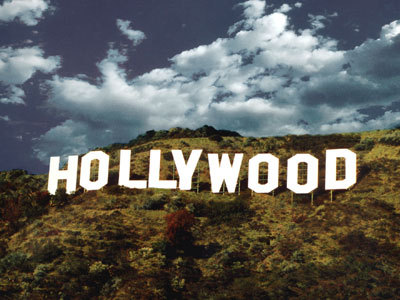 Princetonians in the entertainment industry gathered this afternoon on the front lawn of the Peter B. Lewis Center for the Arts for fruit and conversation, with old Triangle members, producers, actors and actresses rubbing elbows with and screenwriters, comedians and singers.
"Being an actor from Princeton is kind of a disadvantage because people don't care if you're smart in LA," explained Ethan Stone '06. "They just want to see what you have to do. So it's good to have an organization of Princetonians to help network."
Reunions is also an important opportunity for the Southern California Princeton-in-Hollywood alumni to re-connect with peers working in New York City. Among those working in the "other Hollywood" is Josephine Decker '03, who creates music videos and for the next year will be working on a narrative feature, a dark fairy tale about an all-women's accordion group.
Past Princeton reunions have also been studded with Hollywood stars. Tom Wharton '71, who now works as a grip, recalled meeting Jimmy Stewart '32 during a previous Princeton reunion. He added that he comes back now, though, for other reasons: "I wanted to see the degenerates that I went to school with in a pretty place."
by Sophie Jin
by Sophie Jin
Reunions Coverage: Forty years of undergraduate women at Princeton

 Forty years after female undergraduates were first allowed to call themselves Princeton Tigers, a collection of alumni, faculty and current students gathered for the lecture and discussion, "Forty Years of Undergraduate Women at Princeton: Women and Gender Studies in the Classroom and Feminist Activism on Campus." The lecture was given by Jill Dolan, an English and theater professor and director of the Program in the Study of Women and Gender. Sally Frank '80, a renowned feminist activist that brought suit against several eating clubs during her time as an undergraduate to contest their refusal to extend membership to women, joined in the audience and commented on the importance of a quality undergraduate experience both in and out of the classroom.
It is evident that the Princeton community has come a long way from the days when the presence of women was both feared and abhorred by their male counterparts and alumni. Audience members and Dolan both praised the University for its progress under the direction of President Shirley Tilghman. However, issues ranging from the lack of female presence in the most visible leadership positions to the acceptance of demeaning party themes such as Colonial's "CEOs and Office Hos" as harmless jokes have encouraged the administration to organize the Steering Committee on Undergraduate Women's Leadership at Princeton, which is expected to release its report by February 2011. The committee is starting a website over the summer that will accept contributions and conversation from all who are interested.
by Carolyn Tackett
graphic by Kaetlyn Wilcox
Reunions Coverage: Battle of the Alumni Bands

Best way to start off a hazy Friday morning at Reunions? Definitely the "Battle of the Alumni Bands," which is still taking place on the South Lawn of Frist and will be running for another few hours. Now in its 3rd year, the light-hearted event kicked off with the jazzy grooves of the Prospective Sound, a 12-(ish)-piece band largely comprised of members of the Class of 1970 (pictured above). Band-members joked that they hadn't practiced together in 30 years, but it was hard to believe: with a super-tight horn section and a variety of different vocalists, the band sounded hot and funky. A definite highlight was a rendition of the Triangle classic "East of the Sun," featuring a female singer from the class of 1970 (which, in case you didn't know, was the first Princeton class to include women). Next up was mathpanda, a terrific hip-hop group featuring members of the classes of the mid-2000's. With inventive, unpredictable flows and hilarious lyrics -- as well as a killer backup band -- mathpanda made me lament the current lack of a student rap group on campus. Now ripping up the stage is Funkmaster General, featuring members both past and present -- so come on down to the Frist South Lawn and rock out!
Reunions coverage: “Journalism in the Age of New Media” forum
One of the first Alumni-Faculty panels of 2010’s Reunions focused on the future of journalism in the age of new media. Journalists have become more than familiar with such discussions, which Ian Shapira ’00, a reporter for the Washington Post, joked his colleagues had taken to calling “death panels.”
Also on the panel, which was moderated by Professor Paul Starr, were Drew Davis ’70, president and executive director of the American Press Institute, Kathleen McCleery ’75, deputy executive producer of PBS Newshour and Debi Chirichella ’85, COO of Conde Nast Digital.
“We’re working really hard on the Internet, but honestly…I don’t think it’s ever going to be a moneymaker, and if people truly transitioned from print magazines to the Internet, we’d be in trouble,” said Chirichella, picking up an iPad displaying the current cover of GQ, which features the barely-clad model, Miranda Kerr. “That’s why we’re interested in e-readers.”
Less than two days before, Conde Nast’s newly-launched Wired magazine iPad app sold 24,000 copies in the first 24 hours, at the newsstand price of $5 each. Some initial estimates for Wired’s app sales were as low as 2,500 copies.
Davis also described himself as a “big believer in electronic readers,” and said that the media industry ought to look into digital delivery.
As often happens in journalism’s “death panels,” which tend toward gloom and doom, the panelists concluded that though the business model was changing, journalism was around to stay.
“Hopefully, we’ll have the capacity to transform the magazine industry from print into the digital world and end up being able to provide the same kind of quality content — girls and all — that we have in the past,” said Chirichella.
“Storytelling is very, very old,” Shapira said. “It’s been around a long time, and it will survive.”
by Angela Wu
Subscribe to:
Posts (Atom)


 Posts
Posts


